
What Questions Should I Ask Contractors Before Signing?
Elegant Enterprises · Salem, Oregon
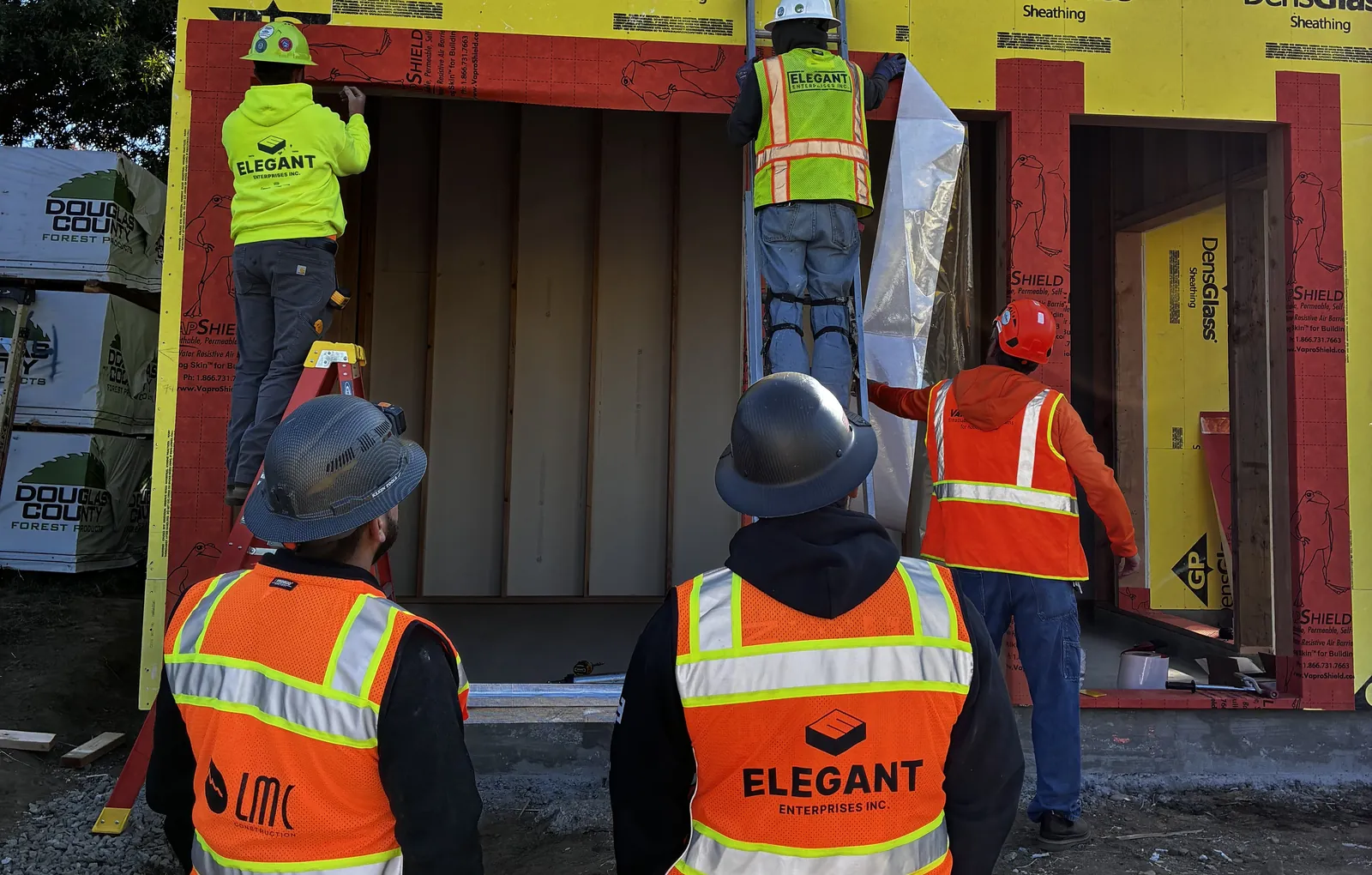
TL;DR: The best way to vet a contractor is to ask direct questions before you sign. How they answer shows whether they'll be honest with you once the old siding or stucco comes off.
- Get the exclusions in writing: Two bids at a similar price can cover very different work.
- Plan for rot before demo: Hidden damage is common on re-sides and re-stuccos. A good contractor warns you before the walls are open.
- Change orders belong in writing: They should be priced and approved by you before the work happens.
- Cheap bids often cover less: Check for the weather barrier, flashing, rot repair, sealants, cleanup, and a written warranty.
- Property managers, ask who does the work: GCs often split the exterior across several subs. One contractor for the whole envelope means one point of contact.
Most people getting bids on a re-side or re-stucco ask two questions: how much, and how long. Both matter. Neither tells you what happens when the contractor opens up a wall and finds rot, or what the final bill looks like compared to the bid.
We're Elegant Enterprises, an exterior construction contractor in Salem, Oregon. We've done stucco, siding, windows and weather barriers since 1998, for homeowners and for multifamily communities across Oregon and Southwest Washington. These are the questions we'd want you to ask us, and the ones we'd ask if we were hiring someone else.
The first part is for anyone getting bids. The second part is for property managers hiring for a multifamily project, where the questions change.
The real red flag is honesty, not skill
When an exterior job goes wrong, it's usually not because the crew didn't know how to hang siding. It's because the contractor wasn't honest with the owner from the start.
The patterns we hear about most:
- They aren't transparent. The bid leaves things out, and the owner finds out later.
- They don't show up when they say they will. Start dates slip. Crews disappear for days.
- They treat it as a transaction. They want to get in, get paid and get out. They aren't interested in giving you sound advice about your building.
You can't see any of this in a price. You can see it in how a contractor answers a few direct questions before you sign.
7 questions to ask before you sign
1. What's excluded from your bid?
Exclusions are where surprises live. Two bids can look close in price and cover very different work. Ask for the exclusions in writing, and ask the contractor to walk you through them.
A good answer is a specific list. A vague answer, or "we'll figure it out as we go," is a warning.
2. What happens if you open the wall and find rot?
On a re-side or re-stucco, hidden damage is common. Water gets behind old siding and stucco for years before anyone sees it. You won't know what's there until the old cladding comes off.
Ask how they will tell you, how they will price the repair, and whether they will get your approval before doing the work.
Here's how we handle it: before any demolition, we tell the owner there's a real chance we'll find rot. We find hidden damage very often, so we set that expectation up front. When it shows up, it's a conversation you were already prepared for, not a surprise.
3. How do you handle change orders?
Every job is different, so change orders will be too. What should stay the same is how they're handled: in writing, priced, and approved by you before the work happens.
Listen for whether the contractor talks about getting to a fair outcome for both sides. Our goal on every change order is a win-win. If a contractor seems to see change orders as where they make their money, keep looking.
4. Who will actually do the work?
Ask whether the crew on your job works for the company you're hiring, or for a sub they bring in. Ask who your point of contact is, and who's on site day to day.
5. How will you handle the weather barrier, flashing and windows?
Siding and stucco are what you see. The weather-resistive barrier (WRB), the flashing and the way windows tie into the wall are what keep water out. Ask whether the WRB is being replaced or patched, and how they flash around windows and doors.
6. When will you start, and what happens if you're delayed?
Get a start date and a rough schedule. Ask how they'll tell you if it changes. A contractor who won't commit to a date before you sign probably won't keep one after.
7. What would you do if this were your house?
This one tells you whether they're interested in helping you or only in selling to you. A good contractor will give you a straight opinion, even if it means less work for them.
Comparing bids: what the low number often leaves out
When you line up three bids, the cheapest one isn't always cheaper. Often it covers less. Check each bid for these items:
- Weather barrier (WRB). Look for full replacement, not patching over the old one. Without it, water gets behind the new siding and rot starts within a few years.
- Window and door flashing. Look for flashing tied into the WRB at every opening. Windows are the most common place for leaks to start.
- Sheathing and framing repair. Look for an allowance or unit price for rot repair. Without one, expect a large change order once the walls are open.
- Trim, sealants and penetrations. Vents, lights and hose bibs should be sealed and flashed. Small leaks here spread inside the wall.
- Prep, protection and cleanup. Landscaping and property should be protected and debris hauled off. Otherwise you pay to fix the damage and the mess.
- Warranty. It should be written, with what's covered and for how long. Without it, you have no recourse if something fails.
If one bid is much lower than the others, ask that contractor which of these it includes. The answer usually explains the gap.
For property managers: ask who's really doing the work
On a multifamily re-side or re-stucco, most property managers hire a general contractor and assume that GC will handle the whole job. Usually, the GC subs it out. Often it goes to several companies: one for the weather barrier, one for windows, one for siding or stucco.
That means three schedules, three crews and three companies pointing at each other when a window leaks. The weather barrier, the windows and the cladding are one system. When three different companies install it, nobody owns how the pieces fit together.
A builder we worked with put it this way:
"Having you handle the window install, all the WRB, and all the siding made sure it was one solid system, and that was definitely a saving grace. The alternative — you doing just the siding, someone else doing the WRB, and someone else doing the windows — would have been a nightmare. Not only for ensuring quality, but for coordination on our end, because then we're trying to schedule between three different entities. Going to one company that can handle the entire scope of exterior improvements made all the difference."
Questions to add for a multifamily project
- Which parts of the scope will you perform yourself, and which will you sub out? Get names for anyone subbed.
- Who is my one point of contact for the whole exterior?
- How will you sequence the work across buildings? Ask about a building-by-building schedule and how materials will arrive.
- How will you keep units dry if weather turns while walls are open?
- How will you communicate with residents?
- What's the largest multifamily job you've done, and can I talk to someone from it?
What one-contract scope looks like
At Woodland Crossing Apartments in Woodburn, we ran the full envelope on 14 buildings under construction at the same time: weather barrier, 948 windows and fiber-cement siding. We used a rolling schedule by building, timed material deliveries to the install sequence, and talked with the project team daily. It finished on schedule, with no buildings sitting exposed waiting on us.
At Riverstone Villas in Kelso, Washington, we did the weather barrier, window install and flashing, and fiber cement siding in three profiles on 14 buildings, all under one project manager. That's a scope that usually gets split across several subs.
One company for the whole envelope means fewer handoffs, fewer gaps between trades and one number to call. In our experience it also runs smoother and costs less than stacking several subs under a GC.
What it looks like when the answers are right
Cynthia W. spent years looking for a contractor for her home. The job was re-siding, stucco, a rooftop deck, parapet walls, a wood deck, French and exterior doors, water damage and rot remediation, and in the end, two structural beams.
She told us other contractors found the work too complex to take on. Another contractor had already made significant mistakes on the project before we started. Our team came in, found practical fixes, and stayed on site through the job, checking the work as it was done.
In her words:
"They are committed to doing things the right way, not simply the easiest way, because they understand that quality workmanship protects and preserves the value of your home. They believe in work that lasts."
That's what the questions above are trying to find: a contractor who tells you what to expect, deals with problems when they come up, and stays involved until the job is done.
Ask us the same questions
If you're getting bids on a re-side or re-stucco in Oregon or Southwest Washington, we'd like to be one of them. Ask us every question on this list. We'll answer them in writing.
CCB# 154927 · 5,000+ projects · Est. 1998