
Fiber Cement Siding vs. Wood Siding: Durability, Cost, & Maintenance
Elegant Enterprises · Salem, Oregon
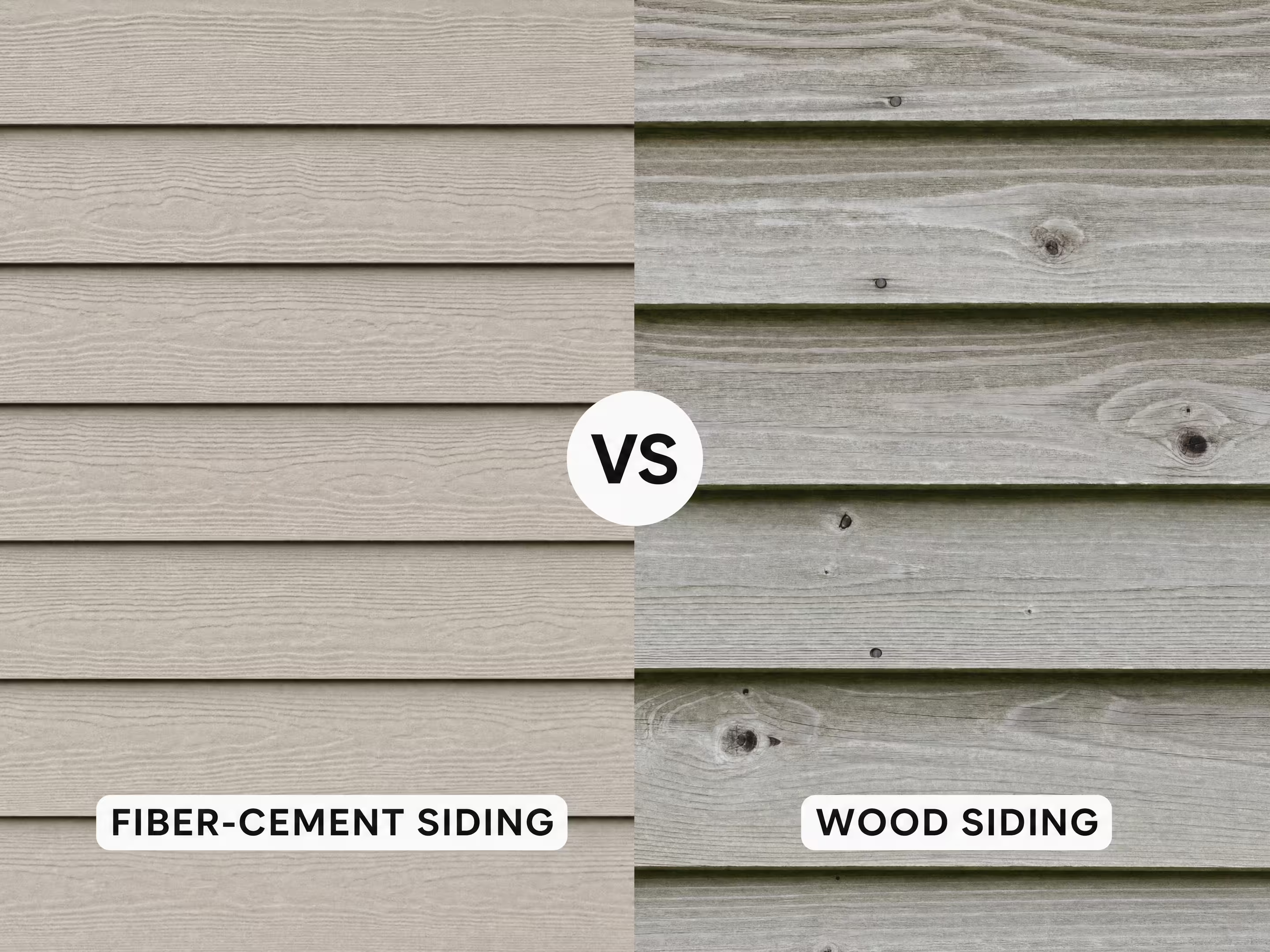
TL;DR: Deciding between fiber cement siding vs wood siding comes down to durability, cost, and maintenance, and for most Pacific Northwest homeowners, fiber cement comes out ahead. This guide breaks down how both siding materials perform so you can choose the right fit for your home.
- Durability: Fiber cement resists moisture, rot, insects, and fire, with a potential lifespan of 100+ years (InterNACHI); wood needs constant protection to survive wet climates.
- Cost: Upfront prices are often comparable, but wood's recurring refinishing makes fiber cement cheaper over its lifetime.
- Resale value: Fiber cement re-siding recouped roughly 114% of its cost at resale (Zonda's 2025 Cost vs. Value Report).
- Maintenance: Wood requires refinishing every 3–7 years; fiber cement holds paint 10–15 years.
- Wood's edge: Authentic character, natural weathering, and easy board-by-board repairs.
Choosing new siding for your home is one of the biggest exterior decisions you'll make, and here in the Pacific Northwest, where rain, moisture, and temperature swings test every material, it's a decision worth getting right. Two of the most popular siding materials on the market are fiber cement and wood, and each has earned its reputation for good reason.
So how do you settle the fiber cement siding vs wood siding debate? It comes down to three things: durability, cost, and maintenance. Let's break down how these two materials compare so you can make a confident, informed choice.
Durability: Built for the Long Haul
When comparing fiber cement vs wood siding on pure toughness, fiber cement takes the lead. Made from a blend of cement, sand, and cellulose fibers, fiber cement siding offers outstanding resistance to the things that destroy exteriors: moisture, rot, insects, and fire. It won't swell in wet winters, it's unappealing to termites and carpenter ants, and because it's noncombustible, it adds a meaningful layer of fire protection to your home.
That durability is backed by hard numbers. According to InterNACHI's Standard Estimated Life Expectancy Chart, properly installed fiber cement siding can last 100+ years—as long as the house itself. Most manufacturers, including James Hardie, stand behind their products with 30-year non-prorated warranties.
Natural wood, by contrast, is an organic material, and that's both its charm and its weakness. Wood siding offers beautiful, authentic character, but it's vulnerable to moisture intrusion, rot, woodpeckers, and wood-boring insects. In a wet climate like Oregon's, unprotected wood can deteriorate quickly. With diligent upkeep, quality wood siding can last for decades; without it, problems can appear within just a few years.
The main disadvantages of wood siding come down to this vulnerability: it demands constant protection from the elements, it's combustible, and neglect gets expensive fast.
Cost: Upfront Price vs. Lifetime Value
Here's the question we hear most during the fiber cement siding vs wood siding debate: is fiber cement cheaper than wood? Upfront, the two are often surprisingly comparable. Fiber cement typically runs about $5–$14 per square foot installed, depending on style and project complexity. The cost of wood siding vs fiber cement varies widely by species: economical pine may come in lower, while premium cedar or redwood often costs as much as fiber cement or more, especially once finishing is factored in.
But the real fiber cement vs wood siding cost story plays out over time. Wood requires repainting or restaining every 3–7 years, and each refinishing cycle on a full exterior can cost thousands. Fiber cement typically holds its finish for 10–15 years and needs little more than an occasional rinse in between. Over a 30-year span, fiber cement usually wins the total-cost-of-ownership math by a wide margin.
It also pays you back at resale. According to Zonda's 2025 Cost vs. Value Report, fiber cement siding replacement recouped roughly 114% of its cost at resale nationally—meaning homeowners got back more than they spent, one of the best returns of any remodeling project.
Maintenance: Weekend Project or Set-It-and-Forget-It?
Maintenance is where the fiber cement siding vs wood comparison becomes most practical. Wood demands a real commitment: regular inspections, caulking, sealing, and that recurring refinishing schedule. Skip a cycle, and moisture finds its way in.
Fiber cement asks far less of you. An annual rinse, occasional caulk touch-ups, and repainting every decade or so is typically all it takes. For busy homeowners who'd rather enjoy their exterior than babysit it, that's a major selling point.
That said, fiber cement isn't flawless. The main downsides of fiber cement siding are its weight and installation demands. The boards are heavy, require specialized cutting tools and dust control (cutting releases silica dust), and can crack if handled improperly. It's emphatically not a DIY material. Professional siding installation is essential to protect both the product's performance and its warranty. Labor costs run higher than lighter materials, and while repainting is infrequent, that doesn't mean it never needs to happen, either.
What About Engineered Wood Siding vs Fiber Cement?
Engineered wood (wood strands bonded with resins and waxes) is a popular middle ground in the fiber cement siding vs wood siding debate. It's lighter and easier to install than fiber cement, delivers a convincing wood grain, and resists moisture far better than natural wood. InterNACHI also rates engineered wood at 100+ years of potential lifespan. Where fiber cement pulls ahead in the engineered wood siding vs fiber cement matchup is fire resistance (engineered wood is still combustible) and long-term moisture performance in consistently damp climates like ours. Both are excellent products; the right choice depends on your budget, home style, and priorities.
So, Is Wood Siding Better Than Fiber Cement?
For most homeowners, the answer to "is fiber cement siding better than wood siding?" is yes. It delivers superior durability, lower lifetime cost, dramatically less maintenance, and excellent resale value, all while replicating the wood grain look that makes natural wood so appealing.
But wood still has its place. If authentic material character matters most to you, if you love the way real cedar weathers, or if easy board-by-board repairability appeals to you, wood siding offers something fiber cement can't fully replicate, provided you're committed to the upkeep.
As experts, we also believe there’s value in combining the two materials strategically. Using wood siding as an accent in areas that are more protected from the elements or receive less direct sunlight can help reduce the maintenance and long-term costs typically associated with an entirely wood-sided exterior. With a thoughtful design and the right materials, this approach can add warmth, character, and creativity to your home while still taking advantage of the durability and efficiency of fiber cement siding.
Fiber Cement Siding vs Wood Siding: Get Expert Help Choosing for Your Home
Still stuck on the question of fiber cement siding vs wood siding? At Elegant Enterprises, we install both fiber cement (including James Hardie products) and stained or raw wood siding across Oregon and the PNW, so our recommendation is based on what's right for your home, not what's convenient for us. With nearly 30 years of experience and over 5,000 projects delivered, we'll help you weigh your options, walk you through the numbers, and handle your siding installation with the craftsmanship it deserves.
Ready to upgrade your exterior with new siding, stucco, windows, or other options? Get a free estimate today.
CCB# 154927 · 5,000+ projects · Est. 1998